
Updated
The familiar seven-chakra model is a spiritual and contemplative framework, not a chart of medically measurable organs. It can help you understand books, classes and rituals that use chakra language. It cannot tell you whether a body part is healthy or predict your character.
A reference to the seven familiar names
The table follows the popular seven-centre sequence discussed by teacher Sandra Anderson at the Himalayan Institute. This is a source for how a tradition describes its model, not independent evidence of a physical energy mechanism. Spellings vary when Sanskrit words are written in English.
Swipe or scroll the table sideways to see all three columns.
| Common English label | Sanskrit name | Symbolic location |
|---|---|---|
| Root | Muladhara | Pelvic floor or base of the body |
| Sacral | Svadhishthana | Pelvic region |
| Solar plexus or navel | Manipura | Navel region |
| Heart | Anahata | Heart region |
| Throat | Vishuddha or Vishuddhi | Throat region |
| Third eye or brow | Ajna | Head or brow region |
| Crown | Sahasrara | At or above the crown of the head |
Read “location” as a place used in the symbolic model. It is not a test result or evidence that an organ, gland or nerve is governed by a particular chakra.
Why two chakra charts may look different
Anderson notes that tantric texts and traditions use differing numbers, names, positions and visualization details. The seven-centre arrangement is one model among others. A chart should identify the approach it represents rather than claim that every tradition uses the same system.
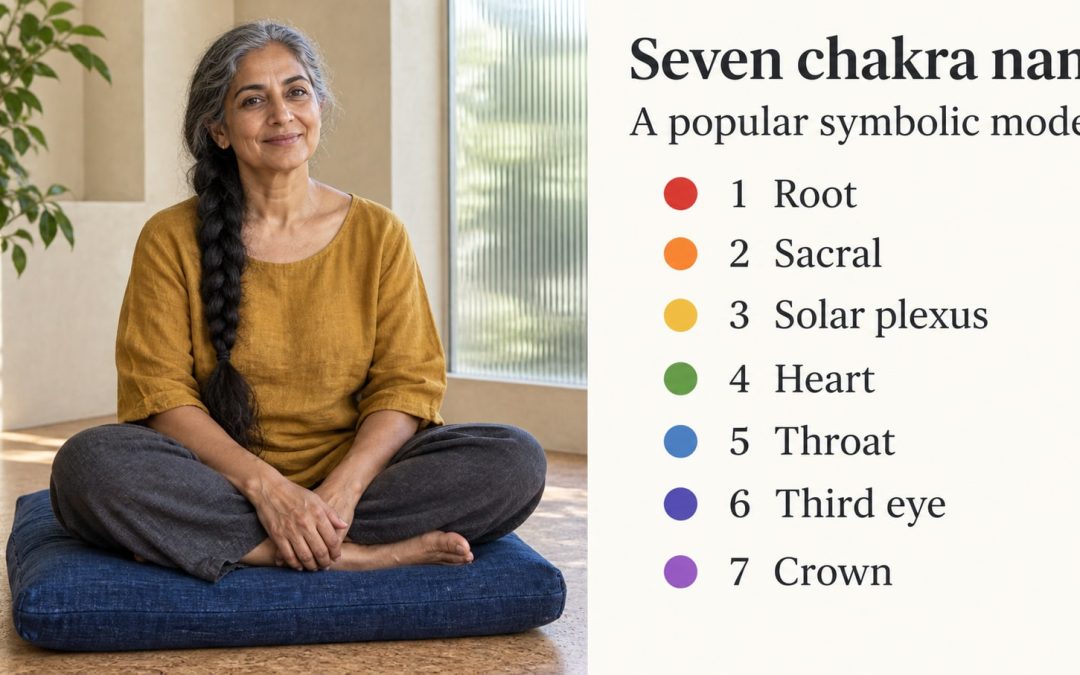
The featured guide lists seven familiar chakra names beside a seated figure. It is a reference to a symbolic model. Treat colours, symbols and sound associations as parts of a particular presentation. Before learning a detailed practice, ask the teacher where that version comes from.
Understand the terms without turning them into diagnoses
A teacher may speak of a centre being “open,” “blocked,” “strong” or “balanced.” Ask what those words mean in that lesson. Do they describe a meditation intention, a metaphor for a situation or a claim about your health? Those uses should not be blurred.
A quiet person does not automatically have a blocked throat chakra. Someone feeling grief is not failing a heart-chakra test. An image of a glowing brow does not establish psychic ability. These labels should not replace listening to a person’s circumstances or respecting their choices.
If symptoms are persistent, severe or worrying, seek appropriate health care. A spiritual chart cannot establish why they are happening. Our chakra balancing guide explains the distinction between a ritual, a session experience and a health claim.
Use the model for a clearly named purpose
For reading a book, use the table to keep names straight. For a class, note the teacher’s definitions and the source of the practices. For personal reflection, choose a theme and connect it to an ordinary question. You can do that without accepting every assertion made about energy.
For example, a theme of expression might prompt you to prepare a clear request. A theme of connection might prompt you to consider whom you would like to contact. Those are deliberate uses of symbolism, not evidence that you have diagnosed or repaired a chakra. The seven journal prompts develop this approach.
What to ask a teacher or reader
- Which tradition, text or contemporary approach are you teaching?
- What do you mean when you describe a chakra as blocked?
- Are these symbols for reflection, or are you making a measurable claim?
- Can I adapt or decline a practice that is uncomfortable?
- Does the course require further purchases, and what are the full costs?
Clear answers let you decide whether a practice fits your interests. You do not need to demonstrate special sensations, disclose private experiences or purchase an assessment simply to learn what the names mean.