
Updated
Energy healing is an umbrella term for practices based on ideas about subtle or spiritual energy. The label does not describe one standard procedure or establish a medical benefit. Ask what a provider actually does before deciding whether a session fits your interests.
Start with the activity behind the label
Services marketed as energy healing may involve hands placed on or near a person, a remote ritual, chakra imagery, sound or symbolic objects. Two providers can use the same label for different activities. A useful description should tell you what happens, how long it lasts and what you are expected to do.
For example, a remote appointment might include a conversation and a period of quiet attention. Those are observable activities. A claim that healing energy travels across distance or time is a spiritual explanation, not something established simply by holding the appointment.
Separate the experience from the claimed mechanism
A person may enjoy the setting, feel listened to or appreciate time away from demands. That experience can inform their decision about attending again. It does not by itself show that an energy field changed or that a health condition was treated.
NCCIH describes Reiki as a practice involving hands placed lightly on or above the body, with a belief in directing energy. Its summary says Reiki has not been clearly shown effective for health-related purposes and that there is no scientific evidence supporting the proposed energy field. These findings should be attached to Reiki, not presented as if every service using the word “energy” were the same intervention.
If someone refers to frequencies or “raising your vibration,” ask what is being measured. Our guide to vibration, experience and belief explains why a physical measurement and a spiritual interpretation are different claims.
Four questions to ask before booking
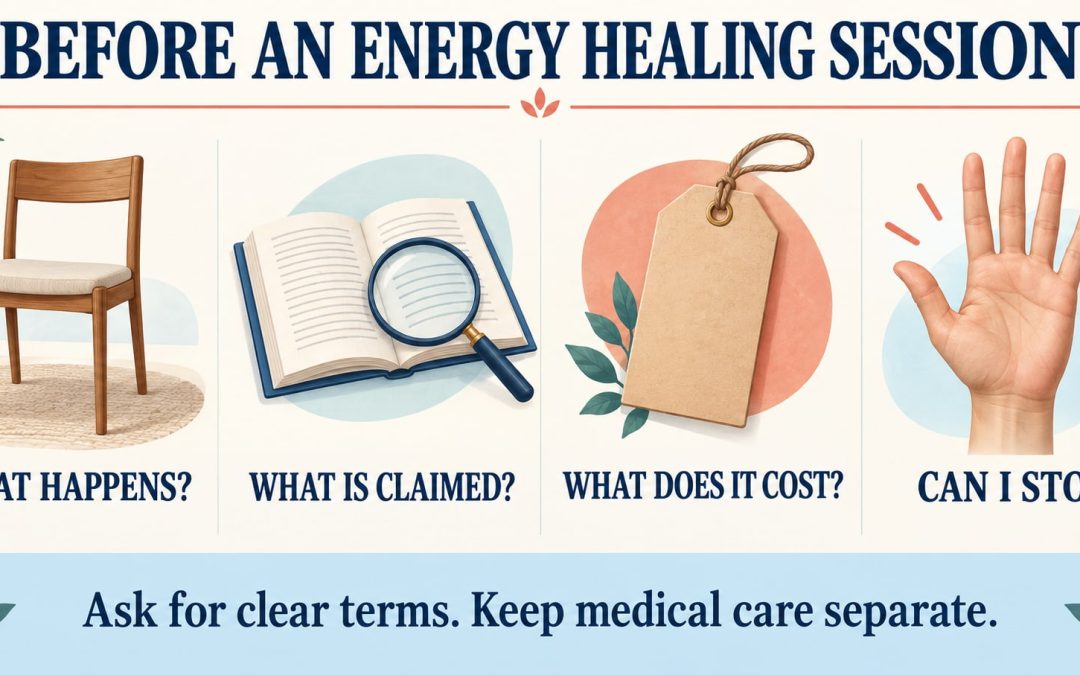
The featured guide highlights four questions. Use them to obtain concrete answers before agreeing to a service.
- What happens? Ask about touch, clothing, position, sound, scents, devices and any products. Ask whether you can choose an alternative or decline an element.
- What is claimed? Is the provider offering a spiritual ritual, a relaxing experience or treatment for a condition? Request evidence that matches the specific health claim, if one is made.
- What does it cost? Confirm the fee, length, cancellation terms, whether payment repeats and whether additional purchases are expected.
- Can I stop? Ask how to pause or end the session, what happens to the fee, and how personal information will be handled.
A certificate can describe a person’s training in a method. It does not by itself establish a regulated health qualification or prove a treatment works. If someone claims a professional licence, check it through the relevant regulator for your location.
Recognise claims that need a different kind of help
Do not use an energy reading to explain persistent pain, headaches, insomnia or other concerning symptoms. Keep prescribed care in place unless your qualified treating professional advises a change. A provider should be able to discuss the limits of a service without saying that your doubts prevent healing.
Stop an activity that causes discomfort or distress. Even ordinary relaxation is not pleasant for everyone: NCCIH’s relaxation overview notes reports of increased anxiety and other unwanted experiences, and advises health care for severe or long-lasting symptoms.
Promises of guaranteed cures, pressure to abandon care or claims that only repeated payments can remove a hidden problem are reasons to reconsider the offer. You do not have to accept a frightening explanation to be respectful of someone’s beliefs.
Decide what would make the experience useful to you
Set your own purpose and spending limit before attending. You might want to learn about a spiritual practice or take a quiet break. Afterward, describe what actually happened: whether you were comfortable, whether your boundaries were respected and whether the terms matched what was promised.
You may value a ritual without treating it as medical care. You may also decide not to attend again. If the service centres on chakras, read what a chakra balancing session may involve to prepare more specific questions.